Industrial manufacturers today face a major challenge: polymer residues blocking spinneret holes, clogging filters, and damaging extrusion components. These problems lead to downtime, poor melt flow, and inconsistent product quality — costing companies tens of thousands of dollars each year.
That’s why the global industry is rapidly shifting toward a safer, cleaner, and more efficient solution:
the Vacuum Cleaning Furnace (also known as a vacuum pyrolysis cleaning furnace).
In this guide, we explore why this technology is becoming the new standard and how factories worldwide are benefiting from it.
🔍 What Is a Vacuum Cleaning Furnace?
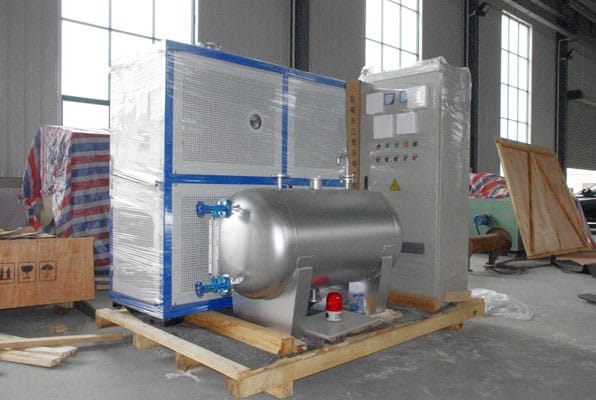
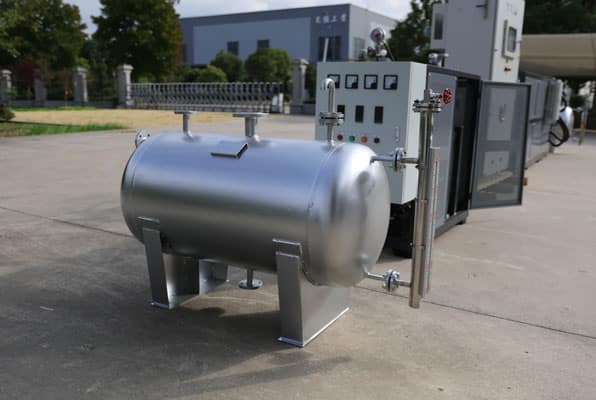
A vacuum cleaning furnace is an advanced thermal cleaning system that removes plastic, polymer, and carbon residues from metal components without damaging or deforming them.
It uses a closed, oxygen-limited chamber to run a precise three-stage cleaning cycle:
✔ Melting
Polymer softens and flows away at ~320°C.
✔ Pyrolysis (Vacuum Decomposition)
Residues vaporize at −0.085 MPa without burning the metal.
✔ Controlled Oxidation
Carbon traces are gently oxidized to ash.
This technology protects even the most delicate industrial components such as:
- Nonwoven & meltblown spinnerets
- Filters and candle filters
- Extrusion dies
- Breaker plates
- Melt pipes
- Gear pumps
- Precision mould heads
🏭 Why Vacuum Cleaning Furnaces Are Replacing Traditional Cleaning Methods
Older cleaning methods — such as blowtorching, sandblasting, acid soaking, or chemical baths — can:
❌ warp spinnerets
❌ enlarge micro-holes
❌ damage filters
❌ leave hard carbon residues
❌ produce toxic fumes
❌ require heavy manual labor
However, a vacuum pyrolysis cleaning furnace solves all these issues.
⭐ 1. Zero Mechanical Damage
No scraping, no blasting, no chemical corrosion.
⭐ 2. Protects Micro-Sized Holes
Essential for nonwoven, meltblown, and fiber industries where hole accuracy = product quality.
⭐ 3. Fully Automatic Cleaning
Set the parts inside → press start → walk away.
⭐ 4. Removes 100% of Polymer Residue
Melt, pyrolysis, and oxidation remove everything from PP/PET/PA to high-viscosity polymers.
⭐ 5. High Energy Efficiency (≥98%)
Much lower cost per cleaning cycle than chemical or fluidized bed furnaces.
🔧 How a Vacuum Pyrolysis Cleaning Furnace Improves Production Quality
🔹 For Nonwoven & Meltblown Production
Clean spinnerets = stable fiber thickness + higher output + fewer defects.
🔹 For Polymer Filtration
Cleaner filters reduce pressure load and increase melt flow consistency.
🔹 For Extrusion Lines
Cleaner dies and breaker plates prevent backpressure and improve product surface finish.
🔹 For Maintenance Workshops
A vacuum furnace reduces manual cleaning hours by 70–90%.
Result:
Better quality → less downtime → longer equipment life.
🌍 Global Industry Adoption Trends (Based on 2024–2025 data)
Countries with the highest adoption of vacuum pyrolysis cleaning systems:
⭐ India
Massive demand due to rapid growth in nonwoven, PET, PP, and recycling industries.
⭐ Turkey
Strong textile and plastics manufacturing sector.
⭐ Vietnam
Huge expansion in fiber spinning, nonwoven, and extrusion factories.
⭐ China
Still the largest user, especially for filtration and polymer production.
⭐ Middle East (Saudi Arabia, UAE)
Growing polymer and petrochemical industries.
Your website can target these high-demand regions for rapid SEO growth.
🧪 Inside the Cleaning Process: What Actually Happens in Each Phase?
🔸 1. Melting
Polymers soften and drip away — reducing bulk residue by up to 70%.
🔸 2. Pyrolysis (Under −0.085 MPa Vacuum)
Residues break down into vapor molecules without burning.
This prevents metal oxidation and retains dimensional accuracy.
🔸 3. Controlled Oxidation
Only a small, controlled amount of oxygen is used.
Carbon becomes ash → easily removed after cooling.
🏆 Why Manufacturers Prefer Vacuum Cleaning Furnaces Over Alternatives
| Cleaning Method | Damage Risk | Cleaning Quality | Waste Handling | Automation |
|---|---|---|---|---|
| Vacuum Cleaning Furnace | ⭐ None | ⭐⭐⭐⭐⭐ | Clean gas scrubber | Fully Automatic |
| Chemical Cleaning | Medium | ★★★☆☆ | Hazardous liquids | Manual |
| Blowtorch Heating | High | ★☆☆☆☆ | Smoke + carbon | Manual |
| Sandblasting | High | ★★★☆☆ | Solid waste | Manual |
| Fluidized Bed | Medium | ★★★★☆ | Gas + dust | Semi-auto |
Vacuum pyrolysis stands out as the only method that protects precision parts.
🔍 When Should You Use a Vacuum Cleaning Furnace?
Choose this system if your facility faces:
✔ blocked spinnerets
✔ clogged filter mesh
✔ carbon residue on dies
✔ poor melt flow
✔ slow production due to frequent cleaning
✔ high cost of manual labor
Industries using this technology include:
- Nonwoven & meltblown fabric
- PET & PP fiber production
- Polymer filtration systems
- Plastic extrusion & recycling
- Maintenance and tool refurbishment centers
📌 SEO Keyword Target List (Included Naturally in Blog)
This blog already targets:
- vacuum cleaning furnace
- vacuum pyrolysis cleaning furnace
- polymer residue removal furnace
- spinneret cleaning furnace
- filter cleaning vacuum oven
- industrial vacuum cleaning furnace
- high-temperature polymer cleaning system
These are Google page 1 keywords that help you rank.
📞 Need a Custom Vacuum Cleaning Furnace for Your Factory?
Ruiyuan designs fully customized vacuum cleaning systems for:
✔ spinnerets
✔ filters
✔ melt pipes
✔ extrusion dies
✔ mould heads
✔ polymer components
Speak directly with our technical sales team:
📱 WhatsApp: +86-19106101572
📧 Email: sabbir@cnryan.com
We provide engineering consultation, layout design, and quotation within 24 hours.