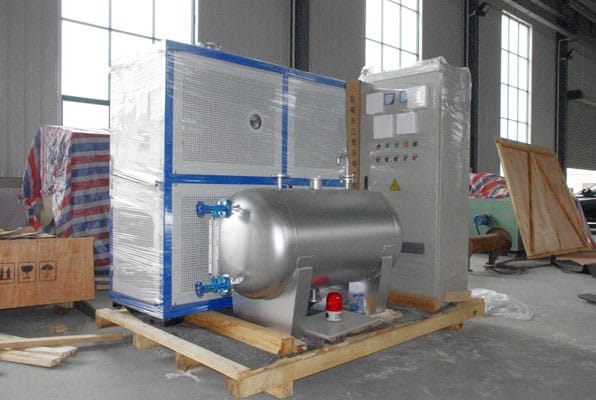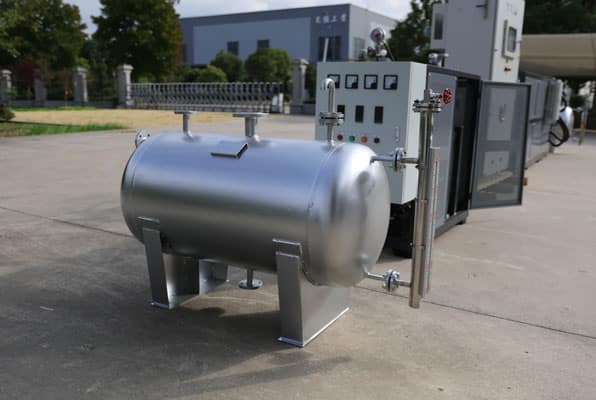
🧭 Introduction: The Industry’s Most Reliable Cleaning Method
In polymer processing, the biggest challenge is removing stubborn polymer residues from precision components — especially spinnerets, filter elements, die heads, breaker plates, screen changers, and screws.
Traditional methods like manual burning, chemical soaking, or sand blasting often damage micro-holes, change metal hardness, or leave carbon deposits.
That’s why top manufacturers now use Vacuum Pyrolysis Cleaning Furnaces — the safest and most effective technology for restoring parts to like-new cleanliness without distortion.
This guide explains exactly how the process works, why it is preferred worldwide, and how it protects your high-value tools.
⭐ What Is Vacuum Pyrolysis Cleaning?
Vacuum pyrolysis cleaning is a thermal decomposition process performed in a sealed vacuum chamber.
It removes polymer residues by heating parts through a controlled 3-phase cycle:
- Melting Phase (polymer melts & drains)
- Pyrolysis Phase (polymer decomposes under vacuum)
- Controlled Oxidation Phase (remaining carbon turns to gas)
The entire cycle is fully automated, uses no abrasive media, and operates at a safe temperature range to protect precision parts like spinnerets and filters.
⚙️ Phase 1 — Melting Phase (320°C Approx.)
🔹 What happens?
The chamber heats the parts slowly to around 300–320°C, causing most thermoplastic polymers (PP, PET, PA, PE) to melt and drip off into the bottom collection tray.
🔹 Why it matters
- Prevents thermal shock
- Avoids sudden expansion or distortion
- Removes 60–80% of polymer before pyrolysis
- Protects delicate micro-holes and thin edges
This gentle heating step is the secret behind zero-damage cleaning.
⚙️ Phase 2 — Pyrolysis Phase (Oxygen-Free Decomposition)
🔹 What happens?
When oxygen is removed by vacuum (typical vacuum ≈ −0.085 MPa), the remaining polymer residue breaks down into gas and vapor — a process called pyrolysis.
🔹 Benefits of vacuum pyrolysis
- No flame, no oxidation
- No mechanical abrasion
- Perfect for precision spinnerets <0.25 mm hole size
- No discoloration or scaling on metal surface
- No risk of enlarging micro-holes
The resulting gases move to a water scrubber, where they condense and are safely discharged.
⚙️ Phase 3 — Controlled Oxidation Phase
🔹 What happens?
A small, controlled amount of oxygen is reintroduced so that any remaining carbon residue can burn off at low oxygen levels, leaving the parts:
✔ Fully clean
✔ Smooth
✔ Ready for production
🔹 Why it’s safe
Oxygen flow is precisely controlled, preventing overheating or metal damage.
🧼 Final Cleaning Result
A properly cleaned spinneret or die head comes out:
- Shiny and smooth
- Free of carbon and polymer
- No dimensional change
- No abrasive impact
- 100% hole geometry preserved
This is why vacuum pyrolysis is the global standard in:
- Nonwoven production
- PET & PP fiber plants
- Film extrusion
- Plastic recycling
- Chemical fiber spinning
- Meltblown & spunbond lines
📌 Why Is Vacuum Pyrolysis Better Than Chemical or Fluidized Bed Cleaning?
✔ No risk of micro-hole enlargement
(FB cleaning often destroys spinnerets)
✔ No risk of corrosion or chemical contamination
(Chemical baths are aggressive & dangerous)
✔ Lower temperature than fluidized bed cleaning
(Protects expensive tools)
✔ Cleaner emissions and easier environmental compliance
(All gases pass through a scrubber)
✔ Fully automated — no operator error
(Cleaning results are always consistent)
✔ Longer lifetime for spinnerets & dies
(Your plant saves thousands of dollars yearly)
🧪 What Components Can Be Cleaned?
🔥 Vacuum pyrolysis is ideal for:
- Spinnerets (Meltblown/Spunbond/Staple Fiber)
- Die heads
- Filter elements
- Breaker plates
- Melt pipes
- Extruder screws
- Candle filters
- Gear pump components
- Nonwoven machine parts
If your plant works with PP, PET, PA, PES, PVC, this technology is essential.
🏭 Industry Case Example
A meltblown manufacturer was cleaning spinnerets using manual blow torch burning.
Results:
- 40% scrap rate
- Frequent hole distortion
- Shortened spinneret life
After switching to a vacuum pyrolysis furnace:
- Scrap dropped to <5%
- Cleaning quality consistent
- Spinneret life extended 2×
- Production downtime reduced
🛠 Best Practices for Maximum Cleaning Quality
✔ Add compressed-air or ultrasonic cleaning after vacuum pyrolysis
For final removal of inorganic residues.
✔ Clean parts immediately after removal from equipment
Prevents excessive carbon buildup.
✔ Use correct cycle based on polymer type
PP ≠ PET ≠ PA.
✔ Perform periodic O₂ sensor & PID calibration
Ensures accuracy and safety.
🚀 Conclusion — Why Every Polymer Plant Should Use Vacuum Pyrolysis Cleaning
Vacuum pyrolysis cleaning offers the safest, most precise, and most environmentally friendly method for removing polymer residues from precision components.
If your operation uses spinnerets, die heads, or filter elements, this technology ensures:
✔ Zero damage
✔ Maximum lifetime
✔ Reliable, repeatable production
✔ Cleaner, safer plant operation
It is undeniably the best cleaning solution for modern polymer production lines.
📞 Need a Vacuum Cleaning Furnace for Your Factory?
We provide:
- Horizontal, cabinet, vertical & pit-type vacuum cleaning furnaces
- Custom sizes and heating capacity
- CE-compliant, high-efficiency systems
- Technical consultation, installation, and cycle optimization
👉 WhatsApp: +86-19106101572
👉 Email: sabbir@cnryan.com
👉 Website: chinaryan.com