The Future of Industrial Heating: Efficiency, Sustainability, and Performance
In the rapidly evolving landscape of industrial manufacturing, the choice of heating systems is paramount, impacting not only operational efficiency but also environmental footprint. As industries worldwide commit to ambitious decarbonization goals, the debate between electric thermal oil boilers and traditional gas-fired thermal oil boilers intensifies. This guide, brought to you by China Ryan, a leader in industrial heating solutions, delves into the critical factors influencing this decision in 2026 and beyond.
Why Thermal Oil Boilers?
Thermal oil boilers, also known as hot oil heaters or thermal fluid heaters, are integral to processes requiring precise, high-temperature heat without the high pressures associated with steam. They are widely utilized across diverse sectors, including chemical processing, pharmaceuticals, food and beverage, and asphalt production. Their ability to maintain stable temperatures and transfer heat efficiently makes them a preferred choice for many industrial applications.
Electric vs. Gas-Fired: A Comparative Analysis
The fundamental difference lies in their energy source and combustion method. Gas-fired boilers rely on the combustion of natural gas or other fossil fuels, while electric boilers convert electrical energy directly into heat. This distinction has profound implications for cost, emissions, maintenance, and operational flexibility.
| Feature | Electric Thermal Oil Boilers | Gas-Fired Thermal Oil Boilers |
| Energy Source | Electricity | Natural Gas, LPG, Biogas, etc. |
| Emissions | Zero direct emissions (if electricity is from renewable sources) | Significant CO2, NOx, and SOx emissions |
| Efficiency | Up to 99% (direct conversion) | 80-90% (combustion losses) |
| Installation | Simpler, no flue gas system required | More complex, requires flue gas system and fuel lines |
| Maintenance | Lower, fewer moving parts, no combustion byproducts | Higher, requires burner maintenance, flue gas cleaning |
| Operational Cost | Varies with electricity prices; can be lower with off-peak rates | Varies with gas prices; generally higher due to fuel cost |
| Safety | No combustion risk, no fuel storage | Combustion risk, requires fuel storage and handling |
| Footprint | Compact design | Larger due to combustion chamber and auxiliary equipment |
| Decarbonization | Key enabler for net-zero goals | Contributes to carbon emissions |
The Rise of Electric Thermal Oil Boilers for Sustainable Industrial Heating
Electric thermal oil boilers are rapidly gaining traction as the preferred solution for forward-thinking industries aiming for sustainable manufacturing and decarbonization. Companies like China Ryan are at the forefront, offering advanced electric heating systems that deliver unparalleled efficiency and environmental benefits.
Key Advantages of Electric Thermal Oil Boilers:
•Zero Direct Emissions: When powered by renewable electricity, electric boilers produce no on-site greenhouse gas emissions, making them a cornerstone of net-zero strategies.
•Superior Energy Efficiency: With conversion efficiencies reaching up to 99%, almost all electrical energy is converted into usable heat, minimizing waste and reducing energy consumption.
•Precise Temperature Control: Electric heating elements allow for extremely accurate temperature regulation, crucial for sensitive industrial processes.
•Reduced Maintenance: The absence of combustion means no burners to maintain, no soot to clean, and fewer moving parts, leading to lower operational costs and increased uptime.
•Compact Footprint: Their design often requires less space, offering greater flexibility in plant layout.
•Enhanced Safety: Eliminating combustion removes risks associated with fuel storage, handling, and open flames.
China Ryan’s Expertise in Electric Thermal Oil Heaters
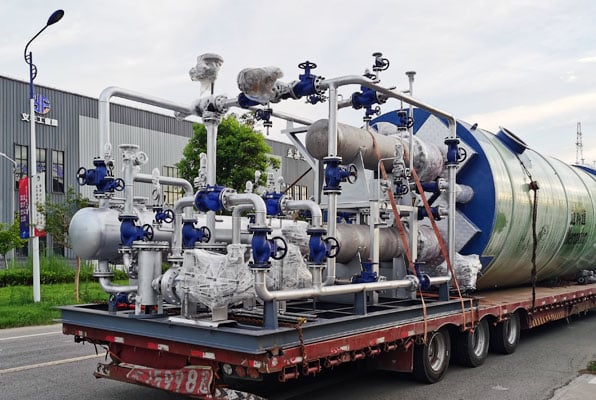
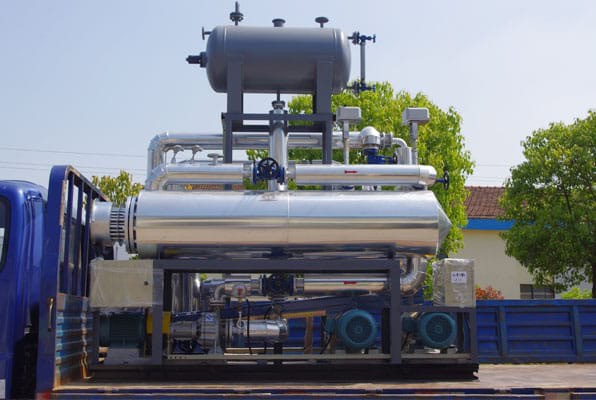
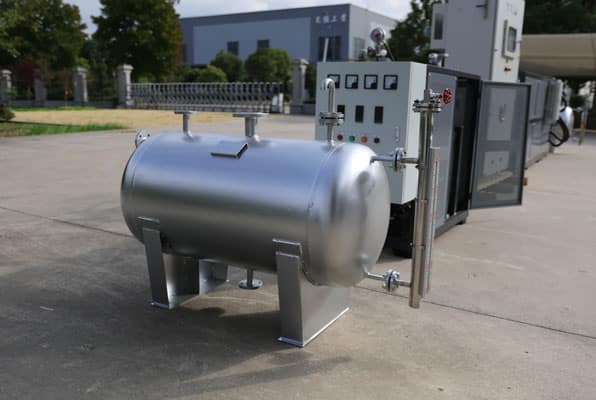
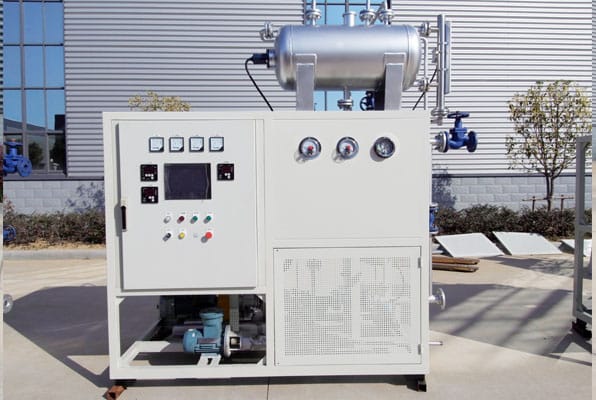
China Ryan (Jiangsu Ruiyuan Heating Equipment Technology Co., Ltd.) specializes in the design and manufacture of high-efficiency electric thermal oil heaters ranging from 10 kW to 4200 kW. Our systems are engineered for endurance and built for success, holding critical safety credentials including the China B-Class Boiler license, D-Class Pressure Vessel license, and CE certification . We offer custom industrial heating solutions tailored to specific process needs in industries such as pharmaceutical, chemical, and die-casting.
Gas-Fired Thermal Oil Boilers: Traditional Workhorses
While electric boilers represent the future, gas-fired thermal oil boilers have long been the workhorses of industrial heating. They offer high heat output and are often more cost-effective in regions with abundant and cheap natural gas. However, their reliance on fossil fuels presents challenges in an era focused on environmental sustainability.
Considerations for Gas-Fired Systems:
•Emissions Regulations: Increasingly stringent environmental regulations are driving up the cost and complexity of operating gas-fired systems.
•Fuel Price Volatility: Dependence on natural gas exposes businesses to fluctuating fuel prices.
•Maintenance Intensity: Regular maintenance of burners, combustion chambers, and flue gas systems is essential.
Making the Right Choice for Your Industrial Process
The decision between electric and gas-fired thermal oil boilers hinges on several factors:
•Decarbonization Goals: If achieving net-zero emissions is a priority, electric boilers are the clear choice.
•Energy Costs: Analyze local electricity and natural gas prices, considering peak and off-peak rates for electricity.
•Regulatory Environment: Anticipate future environmental regulations and their impact on operational costs.
•Space Constraints: Electric boilers typically offer a more compact solution.
•Process Requirements: Consider the need for precise temperature control and operational flexibility.
For a personalized assessment and to explore how China Ryan’s electric thermal oil boilers can optimize your operations and contribute to your sustainability targets, we invite you to contact our experts for a free consultation.